

Where every learner belongs
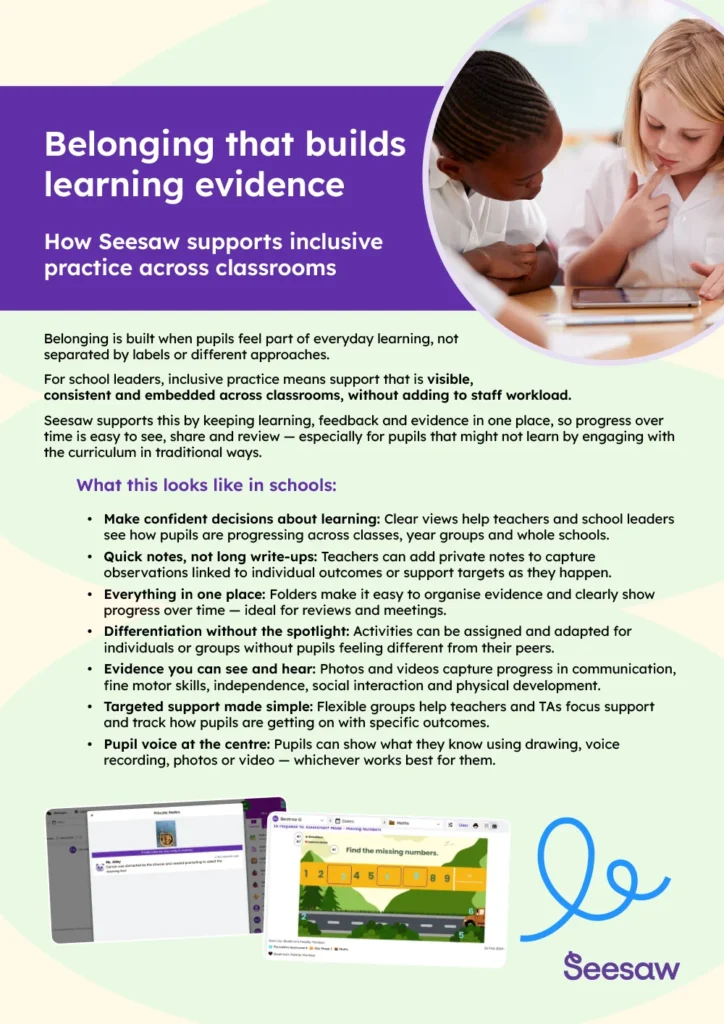
Make your curriculum accessible — while building inclusive practice and evidence through everyday classroom learning — all in one place.
Supporting every pupil should not mean extra paperwork or separate systems.
In many primary schools, inclusive practice already happens every day in classrooms. The challenge is making that learning visible when evidence is needed for reviews, meetings and leadership conversations.
This short guide explores how schools are using Seesaw to capture learning as it happens and build a clear picture of progress over time.
Inside the guide you will see how schools:
Download the guide to see how inclusive practice can be visible, organised and easy to share.
"*" indicates required fields
Belonging starts when learning is kept together. Within Seesaw, learning, feedback and communication sit in the same place so it becomes easier to:
Nothing gets lost between lessons, meetings or review points. Learning stays visible and support becomes part of everyday classroom practice.
This is what allows evidence of progress to build naturally over time.
As a leader, you need to know whether inclusive practice is actually working, and where pupils may need a bit more support.
Seesaw brings together everyday classroom activity so you can see what’s happening across a class, a school or a trust — without asking teachers to do anything extra. You get a clearer picture of who is accessing learning, who is taking part, and where patterns are starting to emerge.
You can step back to look across groups or year levels, or look more closely at individual pupil evidence when you need to, whether that’s for inspection, review meetings or planning next steps.
Not every child shows what they know in the same way and that’s normal in a busy classroom!
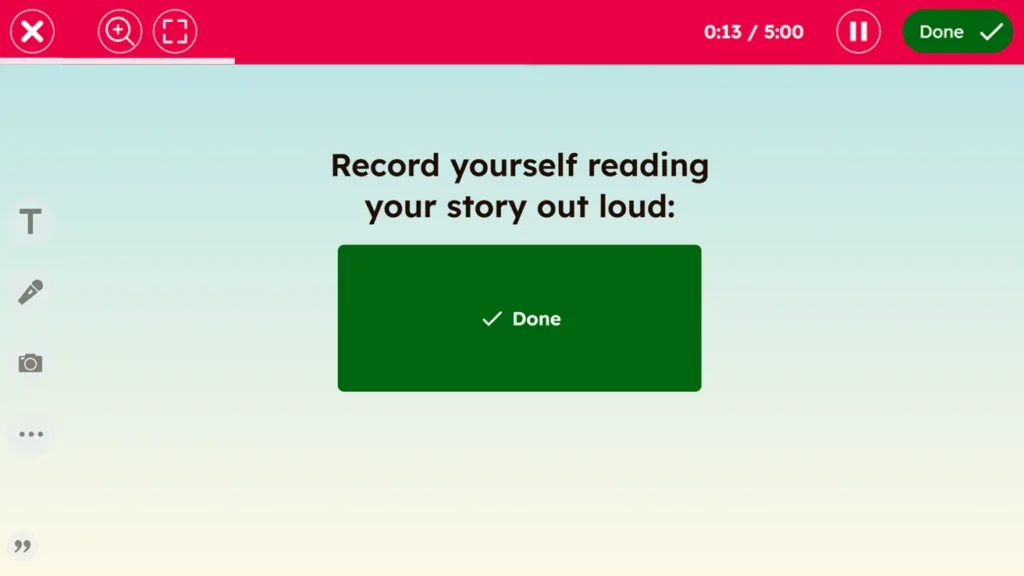
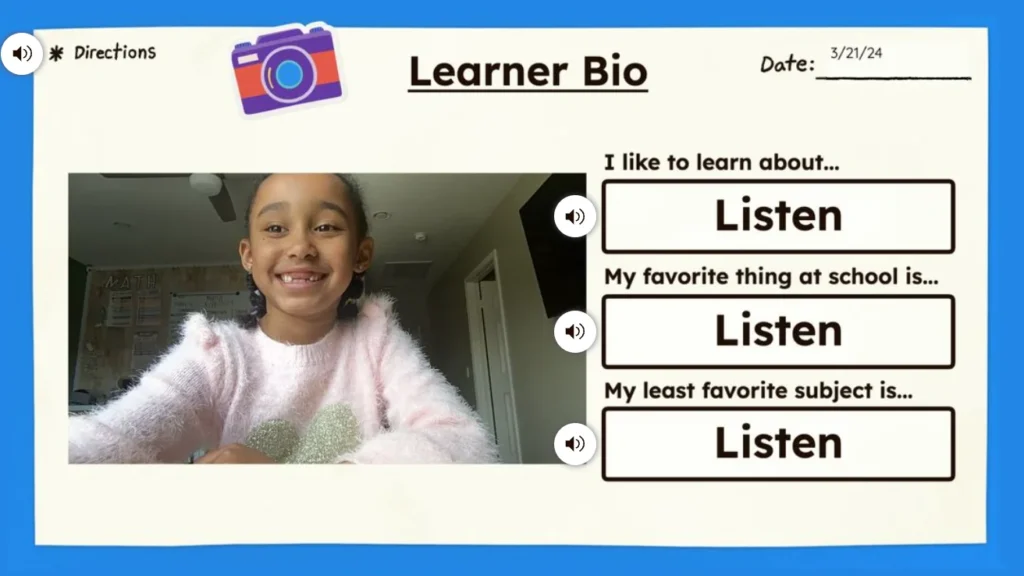
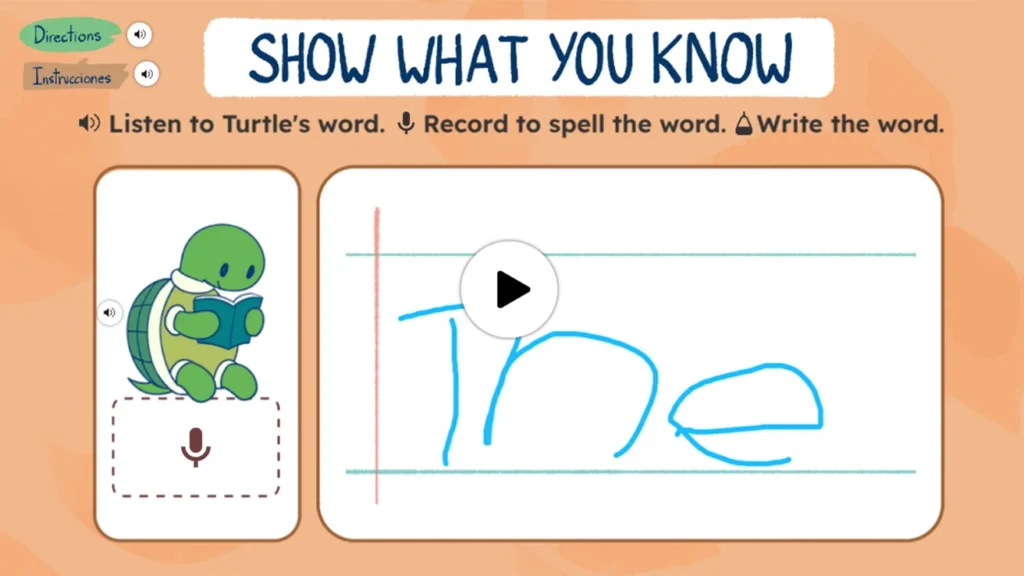
Seesaw gives pupils different ways to respond, whether that’s speaking, drawing, recording video or using text. Learning isn’t limited by writing speed, confidence or who puts their hand up first. You can make adjustments to activities or add scaffolds without rewriting the same lesson again and again — using what you already teach.
As pupils work, it becomes easier to see who’s comfortable, who’s unsure, and who might need a quiet check-in. Support happens during the lesson, not once it’s over and the result is a classroom where more pupils take part, feel capable, and know they belong.
Inclusion works best when it’s part of everyday teaching, not something added on afterwards. Seesaw helps teachers make small, practical adjustments so pupils can access the same learning in ways that work for them — without separating pupils or lowering expectations.
Because pupils can respond in different ways, understanding that might otherwise be missed becomes visible. Over time, it becomes easier to see patterns across classes and year groups, and to understand what’s working and where support might need to change.
This makes conversations with staff, leaders and parents and carers more straightforward, because everyone can see the same picture and is part of the learning loop.
The Education Endowment Foundation highlights approaches that have a strong impact on pupil outcomes. Seesaw helps schools bring these approaches into everyday classroom practice:
Voice Notes: Voice notes make timely, specific feedback easier without adding to marking.
Reflective Portfolios: Help pupils explain their thinking and build independence.
Multimodal Tools: Video and audio tools increase participation, especially when writing is a barrier.
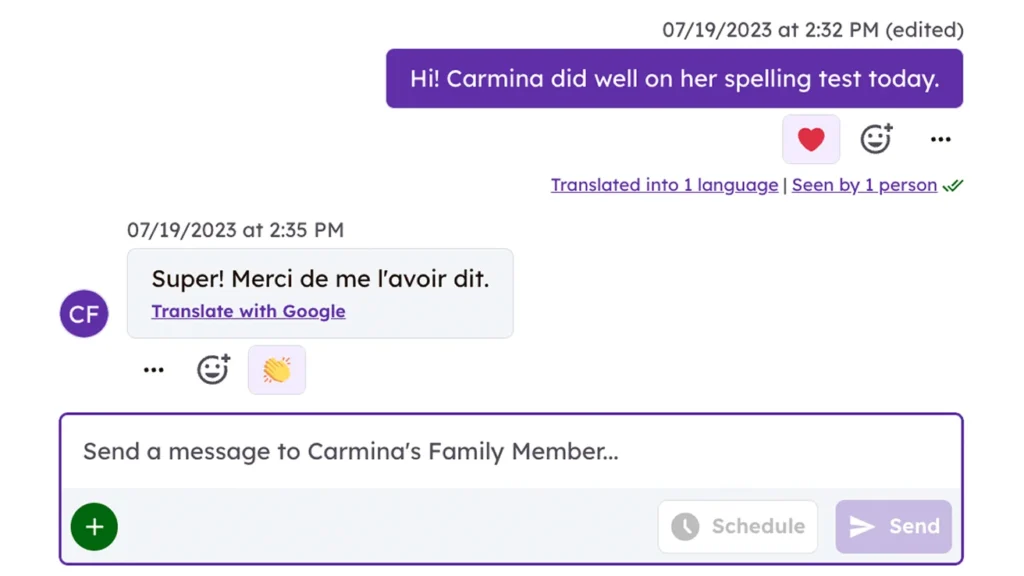
Inclusive Messaging: Translation in over 100 languages helps more families understand and support learning.
Informed by evidence from the Education Endowment Foundation Teaching & Learning Toolkit.