
1. What are the barriers to learning and participation in your school?

Every school starts from a different place, so a useful Inclusion Strategy has to begin with the pupils and families you serve.
Attainment, attendance, behaviour and SEND data will help build that picture, alongside pupil and parent voice. Together, they can help identify where pupils are thriving, where participation is more difficult and where existing provision may need another look.
Everyday learning can reveal things that headline data cannot.
With Seesaw, pupils can demonstrate their understanding through photos, video, voice, drawing and written work. A child who finds it difficult to express an idea in writing might explain it confidently in a recording. Another might use annotation to make their thinking clearer.
Giving pupils different ways to show what they know can help teachers distinguish between a barrier to the task and a gap in understanding. That insight matters when schools are deciding what pupils need and where support can have the greatest impact.
2. Does your universal provision make inclusive practice easier?
The new Inclusion Strategy isn’t simply another SEND document. It asks schools to consider how inclusion is supported across leadership, teaching, curriculum and pastoral provision, with staff across the school having a part to play.
That puts ordinarily available provision and adaptive teaching firmly in the spotlight.
Professional development will be important, but training is only useful if staff can apply it when they’re teaching. Leaders should also consider whether the resources and technology available to teachers make inclusive practice manageable across a whole school.
In Seesaw, teachers can build support and scaffolds into activities without creating an entirely separate learning experience. Audio instructions might help a pupil who finds processing written directions difficult, while visual cues or templates can provide enough structure for another pupil to work more independently.
These can be small adjustments, but making them readily available helps teachers respond to need as part of everyday teaching.
For school leaders, the question is whether inclusive practice depends on individual teachers finding their own workarounds or whether staff have the confidence, tools and shared approaches to make it consistent.
4. How will you evidence progress and impact?
The Inclusive Mainstream Fund comes with an expectation that schools can explain their priorities, how funding is being used and the difference their approach is making.
That means governors and trustees will need more than a list of activity. They need enough evidence to ask useful questions about whether investment and changes in provision are improving pupils’ experiences and outcomes.
No single measure can answer that. Attendance, attainment, behaviour and pupil and parent voice will all contribute different parts of the picture.
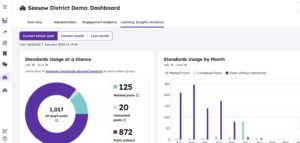
This is where Seesaw’s digital portfolios can add another layer of evidence. Each pupil builds a record of learning throughout the year, allowing teachers to look back at how understanding and progress have developed rather than relying on an isolated piece of work.
The value is that this evidence isn’t being produced for the Inclusion Strategy. Teachers are capturing it because it supports assessment and informs what happens next in learning. When leaders need to understand the wider picture, that record is already there.
3. Are families able to play a meaningful part?

Partnerships with families and wider services are an important part of the DfE’s approach to inclusion.
Most schools already communicate regularly with parents and carers, but sending information home isn’t necessarily the same as giving families a meaningful connection with their child’s education.
For families of pupils with additional needs, visibility can be particularly valuable. If their view of progress is limited to reports, parents’ evenings and formal reviews, much of the learning and development taking place between those moments can be difficult to see.
Seesaw gives families an ongoing window into their child’s learning. They can see work shared from school and respond to their child’s progress, with translation available in over 100 languages.
That creates more opportunities for parents to understand what their child is working on and celebrate progress as it happens. It can also give teachers and families a shared starting point when they do need to talk about learning.
As you review family partnership within your school Inclusion Strategy, consider not only how often you communicate, but how accessible and meaningful that connection is for the families you serve.